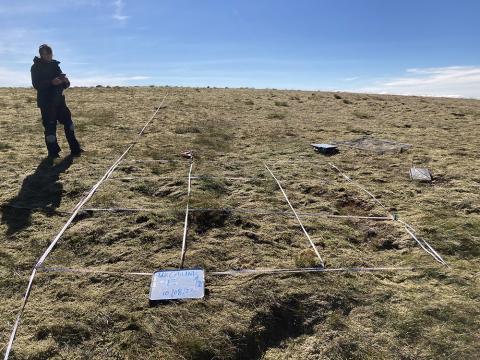
Shrub vegetation is increasing across Europe’s mountain summits according to a new study published in Global Change Biology. The international research team analysed more than two decades of vegetation monitoring data from 576 permanent plots across 36 alpine summits in Europe’s major mountain ranges, including observations from mountain summits at the ECN Cairngorms site.
The study is based on data from the Global Observation Research Initiative in Alpine Environments (GLORIA) monitoring programme.
Across the European sites, researchers found that shrub cover increased by an average of about 2.6% per square metre per decade over the past 20 years. Both evergreen and deciduous shrubs expanded, with evergreen species showing slightly faster increases. The researchers also found that taller shrub species tended to expand the most, while species with higher leaf nitrogen content and those adapted to very open, high-light environments increased less.
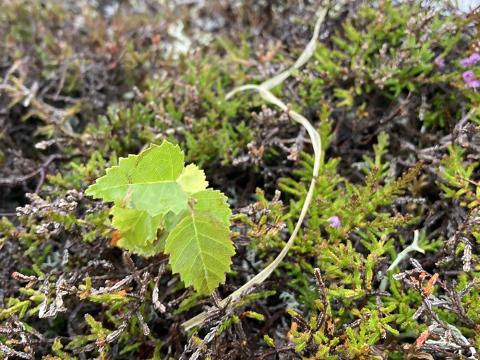
Rising shrub cover is likely linked to climate warming and could reshape mountain ecosystems by altering snow cover, soil temperatures and nutrient cycling. Increasing shrub dominance may also affect specialised alpine plants that depend on open habitats.
The extent to which shrub cover has expanded varied between the study sites with some, including the Cairngorms, indicating a more stable situation. We separately analysed the data for the four Cairngorm summits included in the study and found a small but detectable increase in shrub cover, from 19% in 2000 to 20% in 2022. Changes were generally consistent across the four summits, with south- and west-facing slopes showing slightly stronger increases. There is some evidence of a small increase in the dominance of Arctostaphylos uva-ursi (bearberry) and Vaccinium myrtillus (blaeberry or bilberry) in summit areas.
The findings highlight the value of long-term monitoring networks such as GLORIA and the Environmental Change Network in tracking ecological change in mountain environments, including the Cairngorms, one of the UK’s most important high-elevation ecosystems.
Further information
- Reference: Vanneste, T., H.Pauli, S.Dullinger, et al. 2026. “Widespread Shrubification on European Mountain Summits.” Global Change Biology32, no. 3: e70786. DOI: 10.1111/gcb.70786.
- ECN Cairngorms site
- Global Observation Research Initative In Alpine Environments (GLORIA)
- ECN Monitoring of the Cairngorms Environmental Change Network site is carried out by the UK Centre for Ecology & Hydrology (UKCEH) and is supported by the Natural Environment Research Council award number NE/Y006208/1 as part of the NC-UK programme delivering National Capability.